gracezhang@yijiecool.com |
  English
 Español
 عربى
عربى


Copper-Tube Aluminum-Fin Evaporator: Efficient Heat Transfer for Refrigeration and Climate-Control Systems
Content
- 1 1. Product Overview and Operating Principle
- 2 2. Main Construction and Material Selection
- 3 3. Heat-Transfer Advantages of the Copper-Aluminum Combination
- 4 4. Refrigerant Flow Distribution and Circuit Design
- 5 5. Hydrophilic Fin Technology and Moisture Control
- 6 6. Manufacturing Process and Quality Control
- 7 7. Durability, Corrosion Resistance, and Reliability
- 8 8. Competitive Advantages Over Conventional Alternatives
- 9 9. Application Areas
- 10 10. Engineering Selection Guide
- 11 11. Company Manufacturing Strengths
- 12 12. Recommended Manufacturing and Inspection Workflow
- 13 13. Maintenance and Service Considerations
- 14 14. Q&A
- 14.1 Q1: What is the main function of a copper-tube aluminum-fin evaporator?
- 14.2 Q2: Why are copper tubes combined with aluminum fins?
- 14.3 Q3: What is the purpose of hydrophilic aluminum foil?
- 14.4 Q4: Can the evaporator be customized?
- 14.5 Q5: Which dimensions are available for this product?
- 14.6 Q6: Is the product suitable for dehumidifiers?
- 14.7 Q7: Can it be used in cold-chain or freezer systems?
- 14.8 Q8: How does refrigerant distribution affect performance?
- 14.9 Q9: What durability testing is reported for the product?
- 14.10 Q10: What information should a customer provide when requesting a quotation?
- 14.11 Q11: Does aluminum construction reduce product cost?
- 14.12 Q12: How should the evaporator be maintained?
- 15 15. Conclusion
- 16 References
- 17 Product: Copper-Tube Aluminum-Fin Evaporator
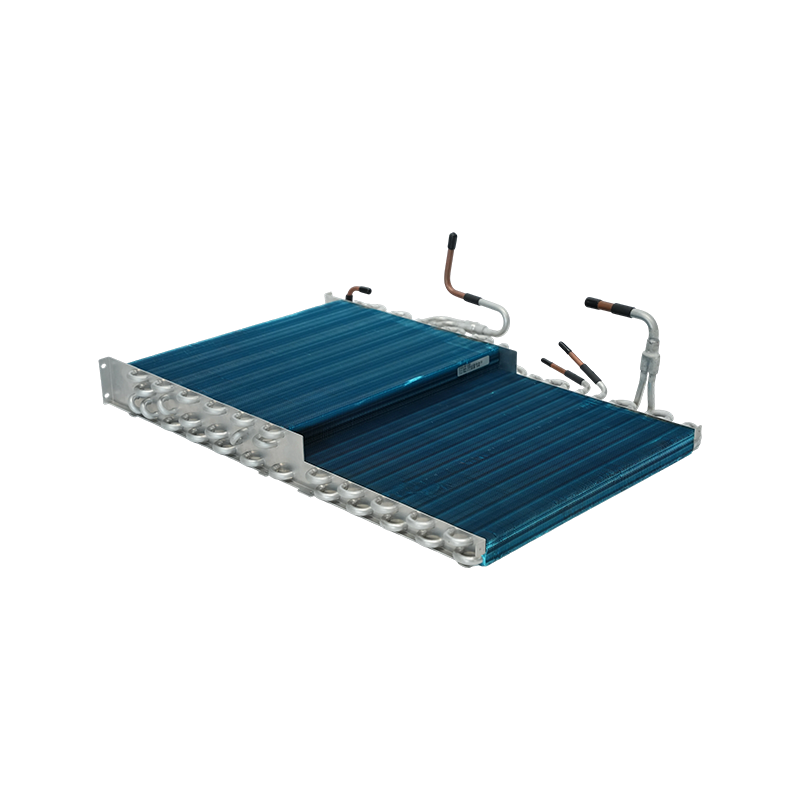
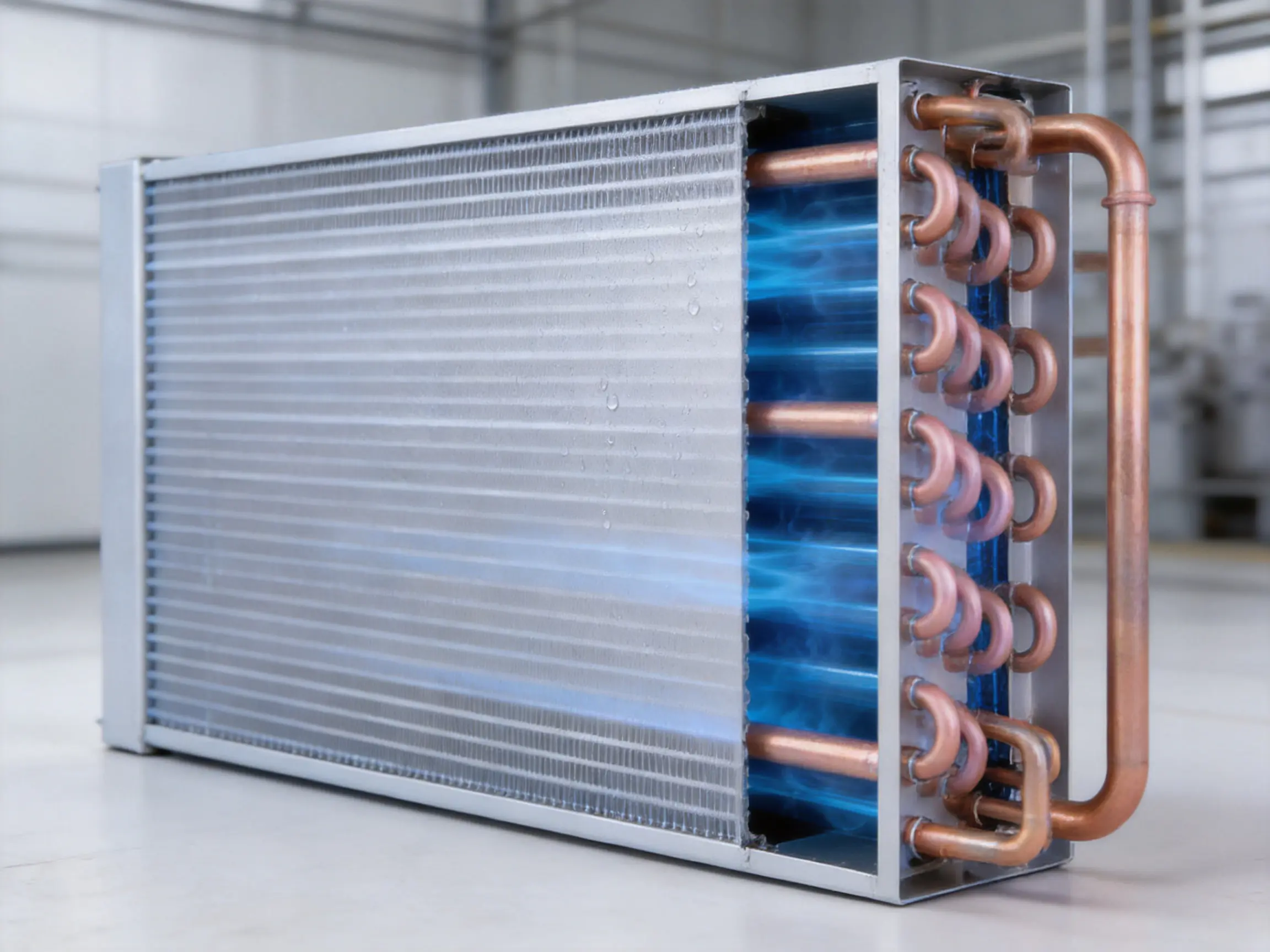
A copper-tube aluminum-fin evaporator is a compact heat exchanger designed to absorb heat from air, refrigerant circuits, or process environments and transfer that heat into a circulating refrigerant. By combining highly conductive copper tubing with lightweight aluminum fins, this type of evaporator provides a practical balance of thermal performance, structural strength, corrosion resistance, manufacturing efficiency, and installation flexibility.
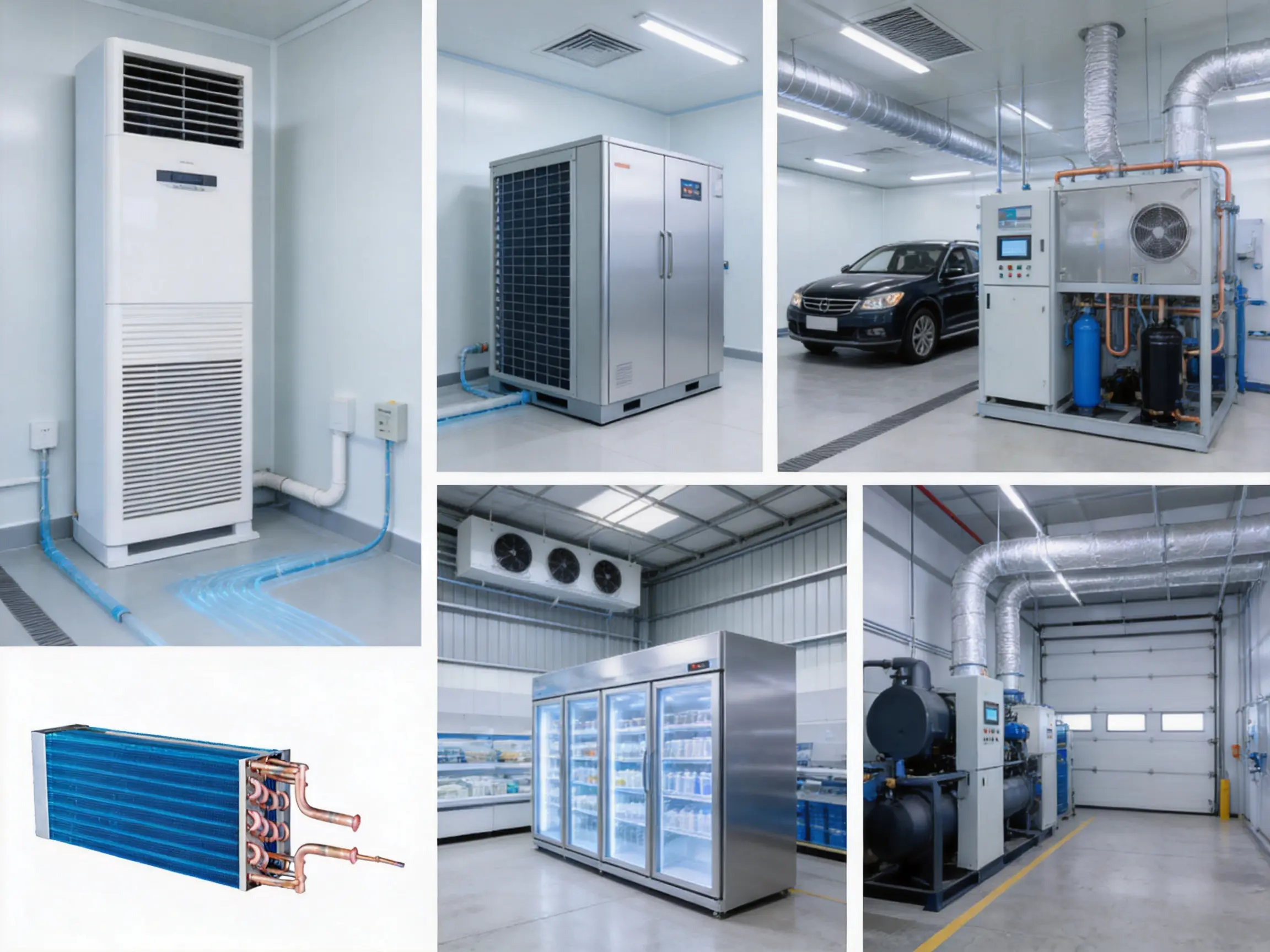
Evaporators are essential components in air conditioners, dehumidifiers, cold-chain equipment, freezers, refrigerated storage systems, automotive climate-control units, and industrial cooling equipment. Their performance directly affects cooling capacity, energy consumption, temperature stability, moisture removal, equipment size, and operating reliability. A well-designed evaporator must therefore do more than provide a large heat-transfer surface. It must also distribute refrigerant evenly, maintain airflow with limited resistance, withstand repeated pressure and temperature changes, and remain stable in humid or corrosive environments.
The copper-tube aluminum-fin evaporator described in this article is designed for a broad range of thermal-management applications. Its compact core structure, hydrophilic aluminum foil, copper-aluminum construction, customizable circuit design, and controlled manufacturing processes make it suitable for both standard equipment and application-specific systems. The product can be adapted for household air conditioners, portable cooling units, dehumidifiers, cold-chain systems, machine rooms, warehouses, automotive air-conditioning equipment, and selected industrial applications.
Hangzhou Yijie Refrigeration Technology Co., Ltd. has developed extensive experience in heat exchanger design and production. With 12 years of industry expertise, the company has built capabilities covering material selection, tube forming, fin production, assembly, brazing or welding, pressure testing, corrosion evaluation, and customized product development. Its focus on high-performance aluminum tube technology enables manufacturers to reduce reliance on traditional copper materials while maintaining reliable heat-transfer performance and improving production economics.
1. Product Overview and Operating Principle
An evaporator operates on the low-pressure side of a refrigeration cycle. After the refrigerant passes through the expansion device, its pressure and temperature decrease. The cold refrigerant then enters the evaporator circuit, where it absorbs heat from the surrounding air or another medium. As heat enters the refrigerant, the refrigerant changes phase from liquid or a liquid-vapor mixture into vapor. The vapor then leaves the evaporator and returns to the compressor.
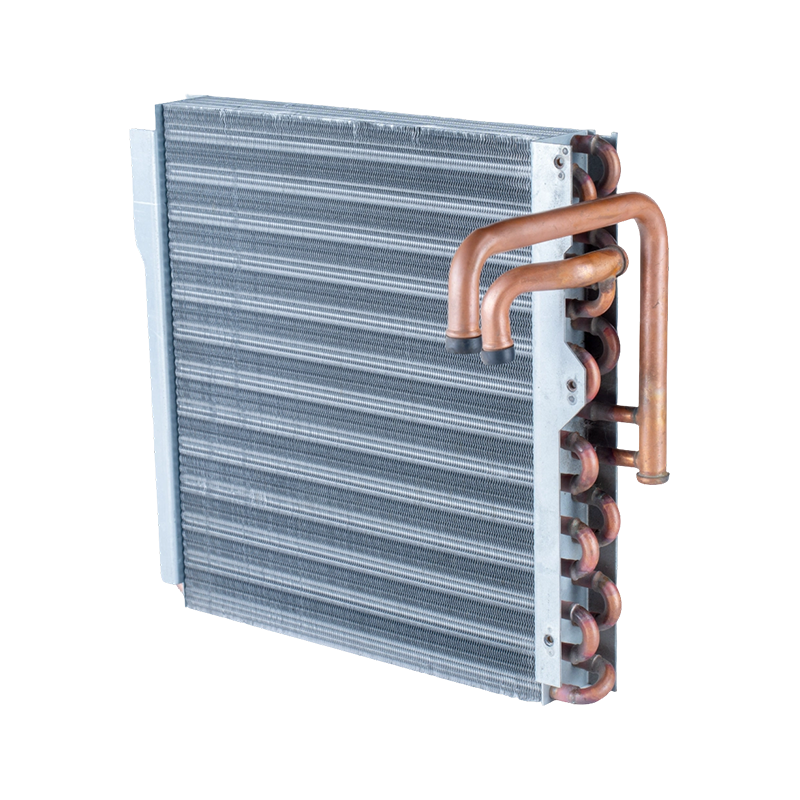
In a finned evaporator, the refrigerant flows through internal tubes while air passes across the external fin surface. Copper tubes provide the internal passage for refrigerant and conduct heat between the refrigerant and the fins. Aluminum fins extend the available air-side surface area, allowing more air to contact the heat exchanger. The combined structure increases heat transfer while keeping the product relatively light and compact.
The copper-tube aluminum-fin design is especially valuable because the air side of a heat exchanger usually presents greater thermal resistance than the refrigerant side. Increasing the external surface area with closely spaced fins improves the transfer of heat from the air to the tube wall. At the same time, the copper tubing supports efficient refrigerant flow and provides a dependable internal structure for pressure-containing operation.
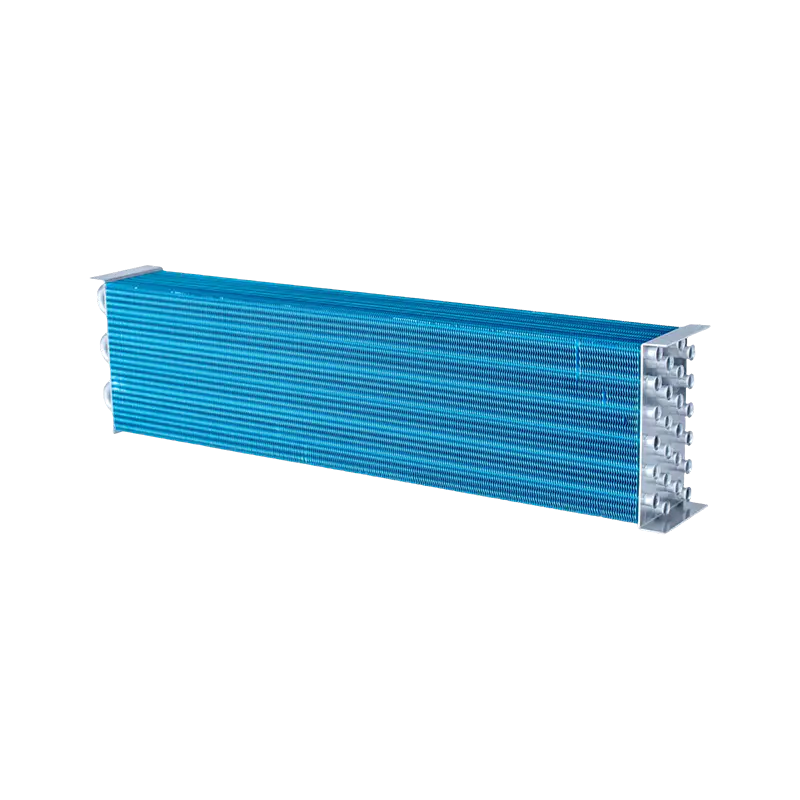
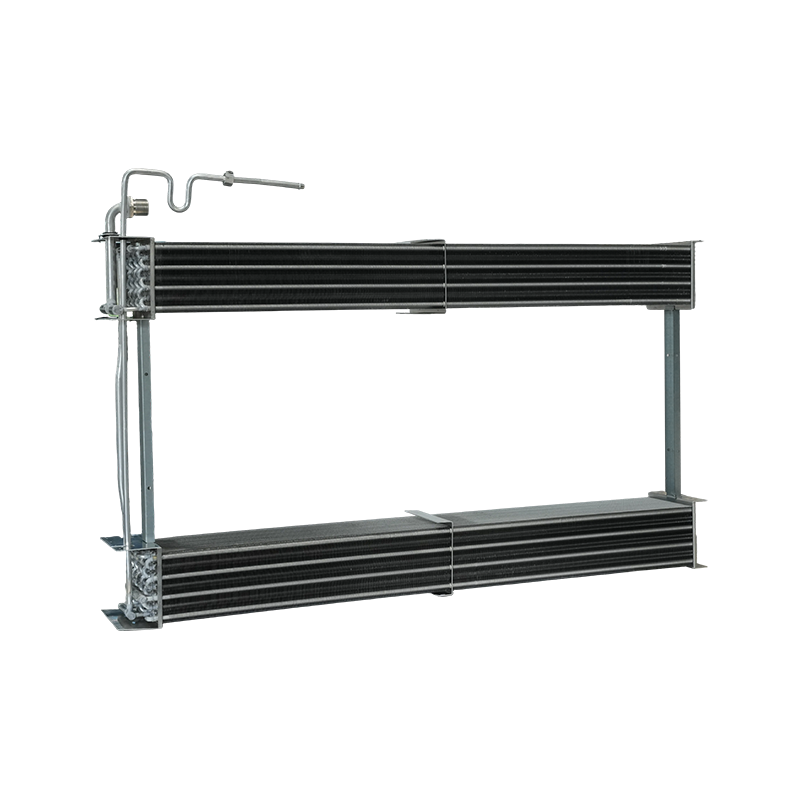
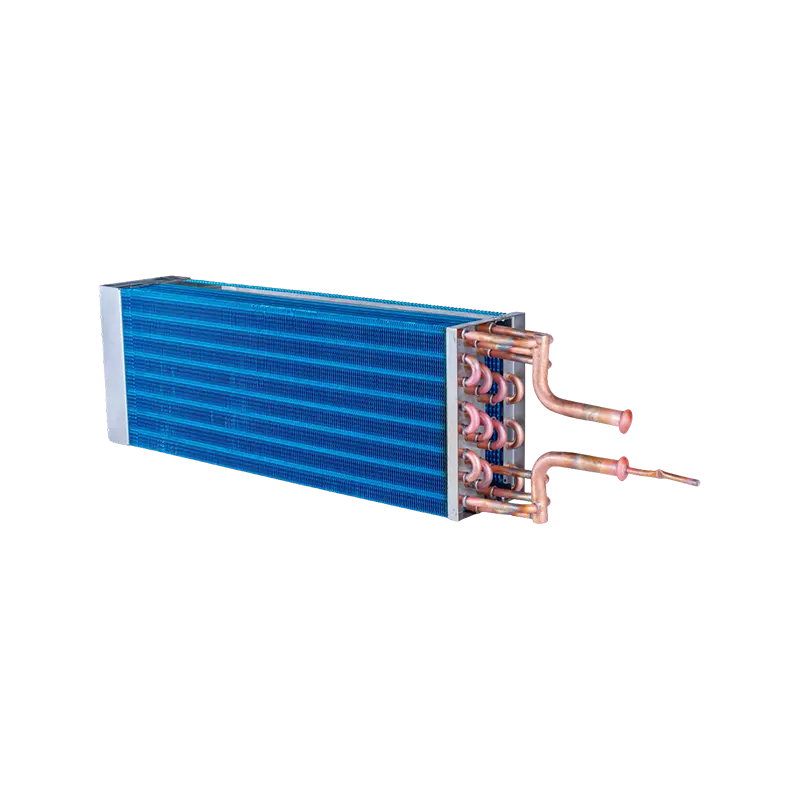
The product is intended to deliver consistent heat absorption without requiring excessive installation space. Depending on the selected configuration, the supplied product information identifies compact core dimensions of approximately 315 millimeters in length, 50.8 millimeters in width, and 63.5 millimeters in height, with an extended height of approximately 281 millimeters. Another listed configuration identifies a core size of approximately 168 millimeters in length, 38.1 or 12.7 millimeters in width, and 510 millimeters in height. These different dimensional references indicate that the product family can be manufactured in more than one structural arrangement. Final dimensions should be confirmed against the customer’s approved technical drawing and application requirements.
The specified mold size is 7 by 21 by 12.7 millimeters. This information is important for evaluating tube and fin arrangement, tooling compatibility, manufacturing repeatability, and installation space. The detailed design may be adjusted according to the required refrigerant, system capacity, airflow direction, connection position, number of circuits, and available cabinet volume.
Copper-Tube Aluminum-Fin Evaporator
2. Main Construction and Material Selection
2.1 Copper Tubes for Refrigerant Circulation
The tubes form the pressure-containing passages through which the refrigerant circulates. Copper is widely used in refrigeration heat exchangers because it offers high thermal conductivity, good formability, proven compatibility with common joining methods, and reliable performance under temperature cycling.
In an evaporator, the tube must transfer heat efficiently between the refrigerant and the surrounding fin structure. It must also maintain dimensional accuracy during bending, expansion, assembly, and connection. High-quality tube processing reduces the likelihood of deformation, restricted flow, leakage, or uneven contact with the fins.
The product information specifies all-copper piping for one listed configuration and copper-aluminum welded piping in the broader product description. These specifications can correspond to different product versions or customized construction options. A final material and connection specification should be established during engineering review. Depending on the system design, the manufacturer can evaluate copper tube circuits, aluminum tube alternatives, or hybrid copper-aluminum structures.
2.2 Aluminum Fins for Expanded Heat-Transfer Area
Aluminum fins provide the large external surface needed for efficient air-side heat transfer. Aluminum is lightweight, easy to form, and suitable for high-volume fin production. Its low density helps reduce the total weight of the evaporator, which is particularly beneficial in automotive equipment, portable cooling units, compact indoor systems, and applications where equipment transportation or installation is restricted.
The listed fin material is hydrophilic aluminum foil. Hydrophilic treatment changes the surface behavior of the aluminum so that condensed water can spread into a thin film and drain more easily. This feature is valuable in evaporators operating below the dew point, where moisture from the air condenses on the fin surface.
The supplied specifications identify fin spacing of approximately 1.75 or 1.8 millimeters and a fin thickness of approximately 0.105 millimeters. Close fin spacing increases the available surface area within a limited volume, while the selected thickness provides a balance between structural stability, airflow resistance, material consumption, and forming performance. The ideal spacing depends on the application. A dehumidifier may require strong condensate drainage, while a cold-storage unit may require a different spacing to manage frost accumulation and cleaning requirements.
2.3 Structural Sheet Metal and Protective Components
The supplied data identifies 1.5-millimeter sheet material in the product structure. One specification describes an all-aluminum construction with 1.5-millimeter galvanized steel, while the broader product description refers to 1.5-millimeter aluminum sheet metal. These references may represent different component options within the product family. The selected material should be confirmed according to the required corrosion resistance, strength, weight, mounting method, and operating environment.
Side plates, frames, brackets, and protective covers contribute to the dimensional stability of the completed evaporator. They help maintain the designed fin alignment, protect the coil during transport, and provide reliable attachment points for installation. In industrial or commercial equipment, the frame may also be adapted to accept vibration isolators, drain pans, sensors, electrical components, or airflow guides.
3. Heat-Transfer Advantages of the Copper-Aluminum Combination
The principal advantage of the product is the complementary performance of copper and aluminum. Copper provides a highly conductive and durable refrigerant passage, while aluminum creates a broad, lightweight external heat-transfer surface. Each material is used where its properties offer the greatest benefit.
Compared with an evaporator made entirely from heavy copper components, a copper-tube aluminum-fin design can reduce weight and material consumption. This may simplify handling, support more compact equipment layouts, and improve manufacturing efficiency. Compared with a poorly designed all-aluminum structure, the copper tube can provide familiar joining characteristics, good internal conductivity, and robust compatibility with established refrigeration manufacturing methods.
The aluminum fins also offer a favorable surface-to-weight ratio. A relatively small quantity of aluminum can form a large number of thin fins, creating extensive contact with the air stream. This makes it possible to achieve useful heat-transfer capacity within a restricted cabinet or equipment enclosure.
Thermal performance is not determined by material conductivity alone. Tube diameter, tube pitch, fin density, fin louver design, circuit length, airflow velocity, refrigerant distribution, and surface treatment all influence the final result. The manufacturer’s engineering capability is therefore important because the materials must be integrated into a balanced system rather than selected independently.
3.1 Lower Weight and More Flexible Equipment Design
Aluminum fins and aluminum structural components reduce the mass of the heat exchanger. A lower-weight coil can be advantageous for wall-mounted indoor units, rooftop equipment, portable refrigeration systems, vehicle applications, and equipment that must be installed by a small service team.
Weight reduction can also influence the design of the surrounding cabinet. Lighter support brackets, smaller transportation packages, and simpler handling procedures may be possible when the coil is engineered correctly. These benefits are especially relevant for manufacturers producing high volumes of compact refrigeration products.
3.2 Improved Condensate Management
In cooling and dehumidification applications, water condenses on the cold fin surface. If condensate remains trapped between the fins, it can increase air resistance, promote dirt accumulation, and reduce heat-transfer performance. Hydrophilic aluminum foil encourages water to form a more continuous film and move toward the drain system.
Effective drainage helps maintain a cleaner air path and reduces the risk of water carryover into fans or downstream equipment. It also supports stable operation when the evaporator is exposed to high humidity. Actual condensate performance depends on fin treatment, coil orientation, airflow velocity, drain pan design, installation angle, and operating temperature.
3.3 Adaptability to Multiple Refrigeration Applications
The product can be configured for different cooling loads and equipment types. Its circuit layout, connection locations, frame dimensions, fin spacing, and tube arrangement can be adapted to suit the system. This flexibility allows equipment manufacturers to use a common development partner for multiple product platforms.
Potential applications include residential air-conditioning units, vehicle air-conditioning systems, dehumidifiers, cold-chain equipment, warehouses, machine rooms, environmental-control systems, and selected eco-friendly equipment. Each application requires engineering validation because refrigerant type, pressure level, temperature range, airflow, frost behavior, and cleanliness requirements can differ significantly.
4. Refrigerant Flow Distribution and Circuit Design
Refrigerant distribution is one of the most important factors affecting evaporator performance. The refrigerant must be divided between parallel circuits in a way that enables each circuit to absorb a useful share of the available heat. If one circuit receives too much refrigerant and another receives too little, the coil may develop uneven temperatures and incomplete utilization of its surface area.
Balanced flow helps the entire evaporator participate in the phase-change process. It can reduce hot spots, cold spots, dry sections, and localized frosting. It may also improve system control because the outlet vapor condition becomes more predictable.
Circuit design must consider the number of tubes, circuit length, pressure drop, distributor geometry, connection orientation, refrigerant properties, and system operating conditions. A short circuit may have insufficient heat-transfer area, while an excessively long circuit may create excessive pressure loss. Parallel circuits require careful matching so that flow resistance is reasonably balanced.
The arrangement of tubes also affects the air-side temperature profile. Tubes may be organized in rows or staggered patterns to increase air contact and improve mixing. The correct pattern depends on the available depth, allowable pressure drop, required capacity, and manufacturing tooling.
| Design Factor | Effect on Evaporator Performance | Engineering Consideration |
| Number of Refrigerant Circuits | Influences flow balance, pressure drop, and active heat-transfer area. | Match the circuit count to system capacity and refrigerant characteristics. |
| Tube Arrangement | Determines contact with the air stream and affects temperature distribution. | Evaluate tube pitch, row depth, airflow direction, and available space. |
| Fin Spacing | Changes heat-transfer area, airflow resistance, condensate behavior, and frost tolerance. | Select spacing according to humidity, temperature, and cleaning conditions. |
| Distributor Design | Controls how refrigerant enters parallel circuits. | Use a layout that minimizes maldistribution and unstable operation. |
| Connection Position | Affects installation, service access, and internal flow path. | Confirm inlet and outlet locations before tooling and production. |
| Airflow Direction | Influences temperature uniformity, condensation, and downstream air conditions. | Coordinate coil orientation with the fan, filter, and drain system. |
For customized projects, the manufacturer can review the customer’s required cooling capacity, refrigerant, inlet and outlet conditions, airflow, installation limitations, and target pressure drop. This engineering input is necessary to select an appropriate circuit arrangement rather than relying only on external dimensions.
5. Hydrophilic Fin Technology and Moisture Control
Hydrophilic aluminum foil is particularly useful in evaporators that operate in humid environments. When a conventional fin surface becomes wet, water may form separate droplets that bridge adjacent fins or remain attached to the surface. These droplets can narrow the airflow passage and increase the possibility of water carryover.
A hydrophilic surface encourages water to spread and drain. The result can be a more open airflow passage, improved moisture removal, and more stable heat exchange during continuous operation. In dehumidification equipment, this behavior helps the coil collect and remove moisture from the air. In household air-conditioning equipment, it supports cleaner condensate movement toward the drain pan.
Surface treatment quality is important. The coating or treatment must be sufficiently uniform, compatible with forming processes, and stable during normal operating conditions. Handling, storage, cleaning agents, and exposure to contaminants can also affect long-term surface behavior. Manufacturing controls should therefore cover raw material inspection, forming quality, surface condition, and finished-coil cleanliness.
Fin spacing must be considered together with hydrophilic treatment. Narrow spacing provides more surface area but leaves less room for condensate and frost. Wider spacing may improve drainage and frost tolerance but can require a larger coil to achieve the same capacity. The correct choice depends on the application’s humidity, evaporating temperature, airflow, and maintenance requirements.
6. Manufacturing Process and Quality Control
6.1 Engineering Review and Product Customization
Advanced manufacturing begins before physical production. The manufacturer reviews the equipment application, required dimensions, refrigerant conditions, connection requirements, airflow, mounting arrangement, and expected environmental exposure. This stage helps identify potential conflicts between capacity, pressure drop, size, weight, and manufacturability.
For customized evaporators, drawings and technical data should define the core dimensions, tube diameter, tube pitch, fin spacing, number of rows, circuit arrangement, connection size, header configuration, material specification, frame structure, drain requirements, and inspection criteria. Confirming these details early reduces tooling changes and improves production consistency.
Digital design and process planning can be used to assess tube layout, fin arrangement, connection positions, and assembly sequence. When required, performance calculations or prototype testing can support the selection of circuit design and airflow configuration.
6.2 Fin Production
Aluminum foil is processed through precision forming equipment to create the specified fin profile. The production process must control fin height, pitch, length, collar dimensions, flatness, and surface condition. Even small deviations can influence tube insertion, contact quality, airflow resistance, and final heat-transfer performance.
The hydrophilic surface must be protected during storage and handling. Scratches, contamination, excessive deformation, or oil residue can affect condensate behavior and product appearance. Proper packaging and controlled work areas help preserve fin quality before assembly.
6.3 Tube Preparation and Forming
Copper tubes are cut, cleaned, shaped, and prepared for assembly. Bending operations must maintain the designed radius and prevent flattening or kinking. Tube ends must remain clean and dimensionally accurate so that headers, distributors, connectors, or welded joints can be fitted correctly.
Tube expansion may be used to improve contact between the tubes and the fin collars. A controlled expansion process helps reduce air gaps and thermal resistance. The process must be carefully adjusted because insufficient expansion can lead to poor contact, while excessive expansion can damage fins or deform tubes.
6.4 Coil Assembly
During assembly, the fins and tubes are aligned according to the approved design. Proper alignment ensures that the air passages remain open and that the tube pattern matches the intended circuit. Side plates, frames, headers, distributors, and mounting components are then added as required.
Assembly fixtures are valuable for maintaining repeatability. They help control coil length, width, height, row alignment, connection position, and frame squareness. Consistent positioning is particularly important when the evaporator must fit into a compact equipment cabinet or connect with preinstalled refrigerant lines.
6.5 Welding, Brazing, and Joint Quality
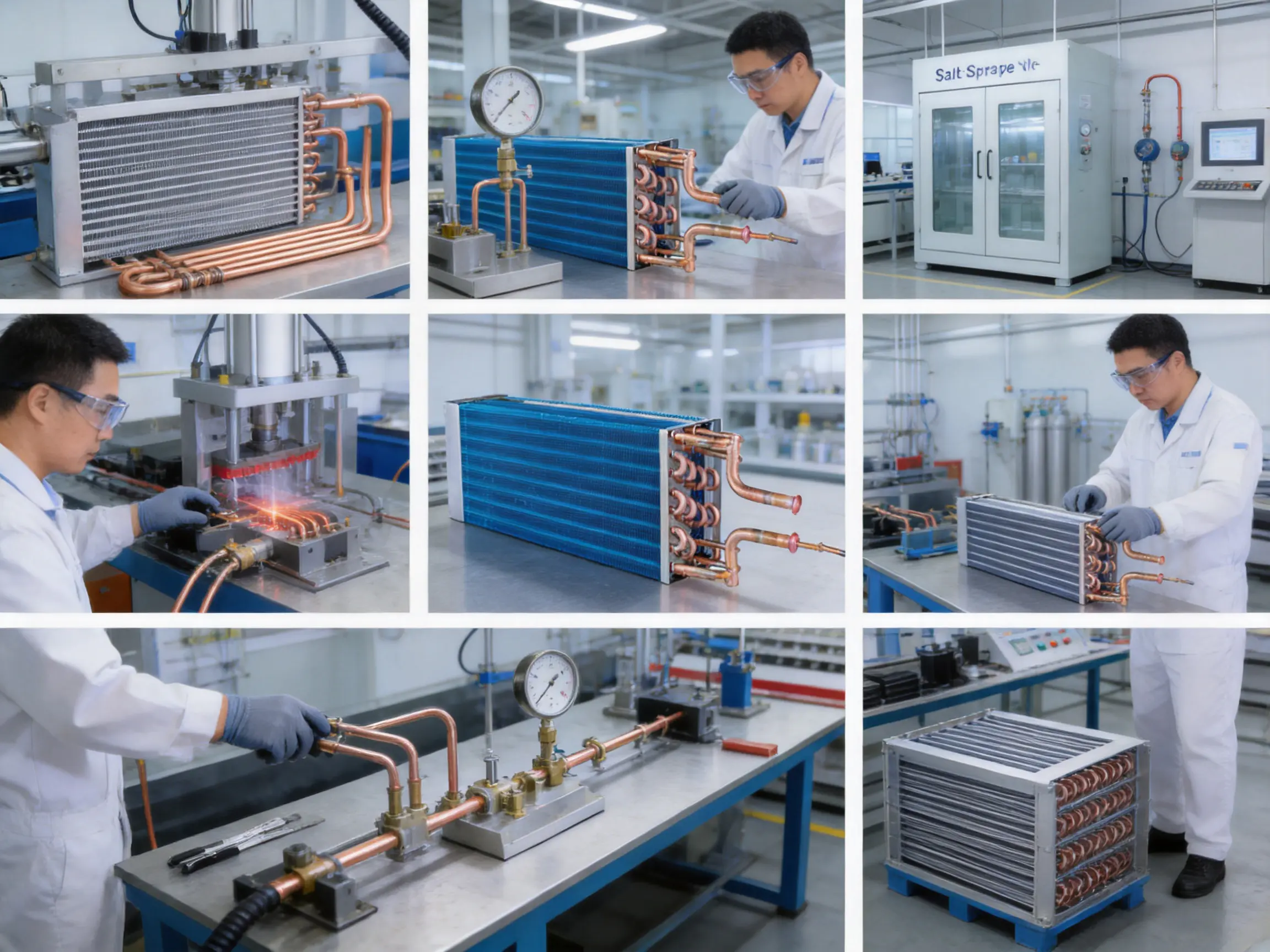
Tube connections must be strong, clean, and leak-resistant. Depending on the selected materials and product structure, the manufacturer may use welding, brazing, mechanical joining, or other approved connection processes. Copper-aluminum joints require careful process control because the two metals have different thermal, mechanical, and metallurgical properties.
Joint preparation, heat input, filler material, shielding, alignment, and cooling conditions can influence joint reliability. A controlled process helps avoid incomplete bonding, excessive penetration, distortion, contamination, and localized weakening. Visual inspection and leak testing are important parts of joint quality assurance.
Where an all-copper piping configuration is selected, established copper joining procedures can provide reliable connection performance. Where copper-aluminum construction is selected, the joint design must be validated for the intended pressure, temperature, corrosion exposure, and service life.
6.6 Cleaning and Finishing
Residual oil, metal particles, flux, dust, and other contaminants can affect refrigeration-system cleanliness and heat-transfer performance. Cleaning procedures should be selected according to the materials, joining method, refrigerant requirements, and customer specifications.
After cleaning, the coil may be dried and protected against contamination before packaging. Open tube ends should be capped or otherwise protected to prevent moisture and foreign materials from entering the internal passages.
6.7 Pressure and Leakage Testing
Pressure testing verifies the structural integrity of the internal refrigerant passages and connections. Leakage testing confirms that the completed evaporator can maintain the required refrigerant circuit without unacceptable loss.
Testing parameters must be established according to the product design, refrigerant, applicable regulations, and customer requirements. A reliable test procedure should control test pressure, holding time, test medium, temperature, instrument accuracy, and acceptance criteria. Test records improve traceability and help identify process deviations.
7. Durability, Corrosion Resistance, and Reliability
An evaporator may be exposed to moisture, condensation, cleaning chemicals, temperature changes, pressure fluctuations, vibration, and repeated start-stop cycles. These conditions can gradually affect tubes, fins, joints, frames, and protective surfaces. Long-term reliability therefore depends on material selection as well as process control.
Hangzhou Yijie Refrigeration Technology Co., Ltd. reports that its products have passed 500-hour standard salt spray testing and 50,000 pressure-cycle verification. Salt spray testing evaluates resistance to corrosive atmospheric conditions, while pressure-cycle testing evaluates the ability of the structure and joints to withstand repeated internal loading. These tests provide useful evidence of product durability, although the actual service life will depend on operating conditions and system design.
Corrosion resistance is especially important for outdoor air-conditioning units, coastal installations, humid warehouses, cold-chain facilities, and equipment exposed to cleaning agents or industrial contaminants. Hydrophilic aluminum foil, tube material, joint design, frame material, and drainage quality all contribute to the overall corrosion performance.
Pressure-cycle verification is relevant because refrigeration systems do not operate at one constant pressure. Start-up, shutdown, defrost, ambient-temperature changes, compressor cycling, and control transitions can create repeated pressure variations. A reliable heat exchanger must accommodate these changes without developing leakage or permanent deformation.
- Salt spray testing helps evaluate resistance to humid and corrosive exposure.
- Pressure-cycle testing helps confirm stability under repeated internal loading.
- Leak testing verifies the integrity of tubes, headers, and connections.
- Dimensional inspection confirms compatibility with the customer’s equipment.
- Visual inspection identifies fin damage, contamination, deformation, and joint defects.
- Material and process records support traceability and quality improvement.
8. Competitive Advantages Over Conventional Alternatives
8.1 Compared with Heavy All-Copper Coils
A copper-tube aluminum-fin evaporator can provide a lower-weight alternative to a heat exchanger made largely from copper. The aluminum fins deliver a large air-side surface without adding the same mass as thick copper fins or a fully copper structure. This can improve handling, reduce shipping weight, and support more compact equipment design.
The hybrid design also allows copper to be concentrated in the refrigerant passages, where its conductivity and joining characteristics are most valuable. Aluminum is used for the large external fin area, where its low weight and formability are advantageous.
8.2 Compared with Basic Untreated Fin Coils
Hydrophilic aluminum foil offers advantages over untreated fin surfaces in wet operating conditions. Better condensate spreading can reduce water retention between fins and support more stable airflow. This is useful in air conditioners and dehumidifiers, where moisture removal is part of normal operation.
8.3 Compared with Poorly Balanced Multi-Circuit Designs
A coil with uncontrolled refrigerant distribution may have sections that are overfed, starved, or thermally underutilized. Careful circuit planning helps the evaporator absorb heat more evenly and can improve system stability. Balanced distribution also supports more predictable outlet conditions and better use of the available fin surface.
8.4 Compared with Non-Customized Standard Coils
Standard catalog coils may not fit the cabinet, airflow path, connection orientation, or cooling load of a particular system. A manufacturer with customization capabilities can modify dimensions, circuit layouts, fin spacing, headers, brackets, and connection locations to improve system matching.
Customization can also reduce the need for adapters, unnecessary piping, or cabinet modifications. This may simplify final assembly and help equipment manufacturers create a more integrated product.
8.5 Material Cost and Production Efficiency
The company’s use of high-performance aluminum tube technology is intended to address the cost and supply limitations associated with traditional copper materials. The company states that this approach can reduce material costs by more than 30 percent in relevant applications. Actual savings depend on the design, material prices, production volume, joining process, and performance requirements.
Aluminum also offers advantages in mass production because it can support lightweight formed components and efficient fin manufacturing. The cost benefit should always be evaluated together with thermal capacity, pressure requirements, corrosion resistance, joint reliability, and lifecycle performance.
9. Application Areas
9.1 Household Air Conditioning
Household air-conditioning systems require compact coils with acceptable airflow resistance, reliable condensate drainage, low noise contribution, and stable indoor cooling performance. The evaporator must fit within a limited indoor-unit volume while providing sufficient capacity across different room loads.
Hydrophilic fins are helpful because indoor units routinely collect condensate during cooling operation. The coil frame and connection design can be customized to suit wall-mounted, floor-standing, cabinet, or other equipment formats.
9.2 Automotive Air Conditioning
Automotive applications place strong emphasis on weight, compactness, vibration resistance, and reliable performance across changing ambient conditions. A lightweight aluminum-fin structure can support vehicle weight-reduction objectives, while customized connections and dimensions help the evaporator fit within restricted dashboard or HVAC-module space.
Automotive use requires detailed validation for vibration, thermal cycling, pressure fluctuation, contamination, and assembly conditions. The final design should be tested according to the vehicle manufacturer’s requirements.
9.3 Dehumidifiers
Dehumidifiers depend on the evaporator to cool air below its dew point and remove moisture. A hydrophilic fin surface can help water move toward the drain pan, while balanced airflow and suitable fin spacing support stable moisture collection.
Because dehumidifiers may operate for long periods in humid conditions, corrosion resistance and cleanability are important. The coil design should consider dust filtration, drain access, fan arrangement, and the possibility of repeated wet-dry cycles.
9.4 Cold-Chain and Freezer Systems
Cold-chain equipment and freezer systems require stable heat absorption during long operating periods. The evaporator must withstand low temperatures, repeated defrost cycles, vibration, and possible frost accumulation.
Fin spacing and circuit design should be selected according to the evaporating temperature, humidity, defrost method, and desired temperature uniformity. In some low-temperature applications, wider fin spacing may be preferable to reduce frost blockage, even though it provides less surface area per unit volume.
9.5 Machine Rooms and Warehouses
Machine rooms, warehouses, and industrial storage spaces may require dependable cooling over extended periods. The evaporator must tolerate dust, humidity, temperature variations, and service conditions that are more demanding than those in a controlled residential environment.
Strong frames, accessible connections, durable surface treatment, and appropriate drainage can improve field serviceability. The coil can be designed around the equipment’s airflow pattern and available installation space.
9.6 Eco-Friendly Equipment
As equipment manufacturers seek lower environmental impact and improved resource efficiency, lightweight heat exchangers and material-saving designs are becoming increasingly important. Aluminum technology may reduce material consumption and support more efficient mass production.
Environmental performance must be assessed across the entire system. Refrigerant selection, compressor efficiency, operating controls, manufacturing energy, recycling, service life, and end-of-life material recovery all contribute to the total environmental profile.
10. Engineering Selection Guide
Selecting the correct evaporator requires a complete understanding of the refrigeration system. External dimensions alone are not sufficient. The following factors should be reviewed before finalizing the design.
10.1 Refrigerant and Operating Pressure
The refrigerant influences pressure level, temperature range, mass flow, oil compatibility, material compatibility, and circuit design. The tube, joint, header, and test specifications must be appropriate for the selected refrigerant and maximum expected operating pressure.
10.2 Cooling Capacity
The required capacity should be defined at specific inlet and outlet conditions rather than as a general target. Air temperature, humidity, airflow, refrigerant inlet quality, evaporating temperature, superheat, and ambient conditions all affect capacity.
10.3 Airflow and Pressure Drop
Higher fin density can increase heat-transfer area but may also increase air-side pressure drop. The fan must provide enough airflow without excessive energy consumption or noise. Coil selection should therefore be coordinated with fan performance, filters, ducts, and cabinet geometry.
10.4 Condensation and Drainage
For wet-surface applications, the design must include an effective drainage path. Coil orientation, fin treatment, drain pan depth, drain outlet position, and installation angle should be considered together. Poor drainage can lead to water accumulation, odor, corrosion, and airflow obstruction.
10.5 Frost and Defrost
Low-temperature systems may experience frost formation. Fin spacing, circuit arrangement, coil depth, airflow, defrost method, and control strategy must be evaluated to prevent rapid blockage. The evaporator should be compatible with the intended defrost frequency and duration.
10.6 Installation and Service
Connection positions, mounting brackets, access clearances, tube routing, drain access, and replacement procedures affect the total value of the product. A coil that performs well in laboratory conditions may still be unsuitable if it is difficult to install or service in the final equipment.
11. Company Manufacturing Strengths
Hangzhou Yijie Refrigeration Technology Co., Ltd., formerly known as Hangzhou Yadan Refrigeration Parts Co., Ltd., has 12 years of experience in heat exchanger development and production. The company’s capabilities cover research, development, engineering design, production, testing, and customized service.
The company’s technical team includes professionals with experience in materials science, heat-transfer technology, manufacturing processes, and equipment development. This combination of expertise supports the development of copper-tube, aluminum-tube, and hybrid heat exchanger solutions for different operating requirements.
A key strength is the company’s emphasis on aluminum tube technology. By developing alternatives to conventional copper-intensive structures, the company aims to provide stable performance with improved material efficiency and production economics. This direction is valuable for manufacturers facing copper price fluctuations, weight restrictions, and increasing demand for cost-effective heat exchangers.
The company also supports customized solutions. Its products can be adapted for household air conditioners, automotive air conditioners, dehumidifiers, cold-chain systems, eco-friendly equipment, machine rooms, and warehouses. Customization may include coil dimensions, fin spacing, tube arrangement, piping, circuit design, mounting structure, surface treatment, and connection locations.
Quality verification is another important strength. The reported 500-hour salt spray test and 50,000 pressure-cycle verification indicate a focus on corrosion resistance and repeated-load durability. These evaluations complement routine dimensional, appearance, leakage, and process inspections.
By combining material development, engineering support, production capability, and testing, the company can serve both domestic and international equipment manufacturers. Its ability to move from technical drawing to prototype and then to mass production is particularly useful for customers seeking a long-term heat exchanger supplier rather than a one-time component source.
12. Recommended Manufacturing and Inspection Workflow
A reliable production workflow should begin with drawing confirmation and application review. The customer and manufacturer should agree on all key specifications, including dimensions, materials, refrigerant, operating pressure, connection type, fin treatment, circuit arrangement, test requirements, and packaging.
Raw materials should be inspected before use. Tube dimensions, aluminum foil thickness, surface condition, frame material, and joining materials should be checked against the approved specification. Nonconforming material should be separated to prevent accidental use.
During production, process controls should monitor fin pitch, tube alignment, expansion quality, joint appearance, frame dimensions, and connection positions. Operators should use appropriate fixtures and tools to reduce variation between batches.
Finished evaporators should undergo visual inspection, dimensional inspection, cleanliness inspection, and leakage or pressure testing. Depending on the customer’s requirements, samples may be selected for performance testing, corrosion testing, pressure-cycle testing, or metallurgical evaluation of joints.
Each shipment should be protected against impact, moisture, dust, and tube-end contamination. Packaging should prevent fin deformation and maintain the orientation of fragile connection components. Clear identification of model, batch, drawing revision, and inspection status supports traceability.
13. Maintenance and Service Considerations
Although the evaporator is designed for long-term operation, maintenance affects its performance and service life. Filters should be cleaned or replaced at appropriate intervals so that dust does not block the fin passages. Accumulated dirt increases airflow resistance and reduces heat transfer.
Condensate drains should be checked to ensure that water can leave the coil and drain pan without obstruction. Standing water can contribute to corrosion, odor, microbial growth, and cabinet damage. The evaporator should be installed with the correct orientation and drain slope.
When cleaning the coil, service personnel should use methods and chemicals compatible with hydrophilic aluminum surfaces, copper tubes, coatings, and frame materials. Aggressive chemicals, excessive pressure, or sharp tools may damage the fins and reduce performance.
Service inspections should include signs of leakage, fin corrosion, tube deformation, loose brackets, unusual frosting, uneven temperature distribution, and abnormal pressure drop. Early detection allows corrective action before a small issue becomes a major system failure.
14. Q&A
Q1: What is the main function of a copper-tube aluminum-fin evaporator?
The evaporator absorbs heat from air or another surrounding medium and transfers that heat to a circulating refrigerant. The refrigerant evaporates inside the tubes, while the aluminum fins increase the external surface available for air-side heat transfer.
Q2: Why are copper tubes combined with aluminum fins?
Copper provides high thermal conductivity, reliable refrigerant containment, and good compatibility with established tube-joining methods. Aluminum provides a lightweight, formable, and extensive external heat-transfer surface. Combining the two materials uses each one where its properties are most beneficial.
Q3: What is the purpose of hydrophilic aluminum foil?
Hydrophilic aluminum foil helps condensed water spread across the fin surface and drain more easily. This can reduce water retention between fins, support stable airflow, and improve moisture-removal performance in air conditioners and dehumidifiers.
Q4: Can the evaporator be customized?
Yes. Customization may include dimensions, fin spacing, tube arrangement, circuit layout, connection locations, frame structure, mounting brackets, piping, surface treatment, and drain configuration. The final design should be confirmed through technical drawings and application data.
Q5: Which dimensions are available for this product?
The supplied product information includes a compact configuration with core dimensions of approximately 315 by 50.8 by 63.5 millimeters and an extended height of approximately 281 millimeters. Another listed configuration identifies dimensions of approximately 168 by 38.1 or 12.7 by 510 millimeters. Because these figures represent different product references, the final dimensions should be confirmed before production.
Q6: Is the product suitable for dehumidifiers?
Yes. Hydrophilic fins, suitable circuit design, effective condensate drainage, and corrosion-resistant construction can make the evaporator suitable for dehumidification equipment. The design must be matched to the required airflow, humidity, temperature, capacity, and drain system.
Q7: Can it be used in cold-chain or freezer systems?
It can be considered for cold-chain and freezer applications when the tube, circuit, fin spacing, frame, and defrost requirements are correctly designed for low-temperature operation. Frost formation, pressure, refrigerant compatibility, and defrost conditions must be evaluated before approval.
Q8: How does refrigerant distribution affect performance?
Uneven distribution can leave some portions of the coil underused while overloading other circuits. Balanced distribution allows more of the evaporator surface to participate in heat absorption, improves temperature uniformity, and supports more stable system operation.
Q9: What durability testing is reported for the product?
The company reports 500-hour standard salt spray testing and 50,000 pressure-cycle verification. These tests evaluate corrosion resistance and stability under repeated pressure loading. Actual product qualification should follow the customer’s application standards and applicable regulations.
Q10: What information should a customer provide when requesting a quotation?
The customer should provide the application, cooling capacity, refrigerant, operating temperatures, design pressure, airflow, inlet and outlet conditions, available installation space, connection requirements, fin spacing preference, drainage conditions, quantity, inspection requirements, and target delivery schedule.
Q11: Does aluminum construction reduce product cost?
Aluminum can reduce weight and material consumption, and the company states that its high-performance aluminum tube technology can reduce material costs by more than 30 percent in relevant designs. Actual savings depend on the final structure, production volume, material prices, joining process, and performance requirements.
Q12: How should the evaporator be maintained?
Maintenance should include filter cleaning, fin inspection, condensate-drain inspection, leakage checks, and careful cleaning with compatible materials. The fins should not be crushed, scraped, or exposed to unsuitable chemicals.
15. Conclusion
The copper-tube aluminum-fin evaporator is a practical heat-transfer solution for refrigeration, air-conditioning, dehumidification, cold-chain, automotive, and industrial equipment. Its design combines copper refrigerant passages with lightweight aluminum fins to provide a strong balance of thermal performance, compactness, weight reduction, condensate management, and manufacturing efficiency.
Hydrophilic aluminum foil supports moisture drainage, while carefully selected fin spacing and circuit arrangements help maintain airflow and refrigerant distribution. The product can be produced in multiple dimensional configurations and customized to meet the requirements of different equipment platforms.
The performance of an evaporator depends on more than its basic materials. Tube expansion, fin contact, circuit balance, connection quality, pressure testing, corrosion protection, cleanliness, and dimensional control are all essential. Hangzhou Yijie Refrigeration Technology Co., Ltd. combines heat exchanger expertise, aluminum technology, customized engineering, production experience, and durability verification to support these requirements.
For equipment manufacturers, the product offers an opportunity to improve system integration while reducing unnecessary weight and material use. For refrigeration engineers, it provides a flexible platform that can be adapted to airflow, refrigerant, capacity, installation, and environmental conditions. With correct specification and validation, the copper-tube aluminum-fin evaporator can support reliable and efficient operation across a wide range of modern thermal-management systems.
References
ASHRAE Handbook—Refrigeration. American Society of Heating, Refrigerating and Air-Conditioning Engineers.
ASHRAE Handbook—HVAC Systems and Equipment. American Society of Heating, Refrigerating and Air-Conditioning Engineers.
Refrigeration and Air Conditioning Technology. Standard engineering reference for refrigeration-cycle components and heat exchangers.
Heat Exchanger Design Handbook. Technical reference covering heat-transfer surfaces, flow distribution, pressure drop, and exchanger construction.
Aluminum Association. Technical guidance on aluminum materials, forming, surface treatment, and corrosion considerations.
International Organization for Standardization. General principles for corrosion testing, pressure testing, and quality evaluation of metallic components.
Manufacturer-provided technical information for copper-tube aluminum-fin evaporators, material specifications, dimensions, testing, and application capabilities.