gracezhang@yijiecool.com |
  English
 Español
 عربى
عربى


Precision Compact Ice Maker Condenser: Efficient Heat Exchange, Durable Aluminum Construction, and Custom OEM Performance
Content
- 1 Product Overview
- 2 Core Technical Features
- 3 Performance Advantages Over Conventional Alternatives
- 4 Manufacturing Technology and Process Strengths
- 5 Quality Management and Reliability
- 6 Applications
- 7 Customization and OEM Support
- 8 Company Manufacturing Strengths
- 9 Installation and System Integration Considerations
- 10 Environmental and Commercial Benefits
- 11 Q&A
- 11.1 What is the main function of the Precision Compact Ice Maker Condenser?
- 11.2 What types of equipment can use this condenser?
- 11.3 Is the condenser available in different dimensions?
- 11.4 Why are hydrophilic aluminum fins used?
- 11.5 Does the product use aluminum or copper?
- 11.6 How does aluminum tube technology reduce cost?
- 11.7 What reliability testing has been reported?
- 11.8 Can the condenser be customized for a new ice maker model?
- 11.9 How does the condenser affect ice production efficiency?
- 11.10 What information should an OEM customer provide?
- 11.11 Is the condenser suitable for continuous operation?
- 11.12 How should the condenser be maintained?
- 12 Conclusion
- 13 References
- 14 Product: Precision Ice Maker Condenser
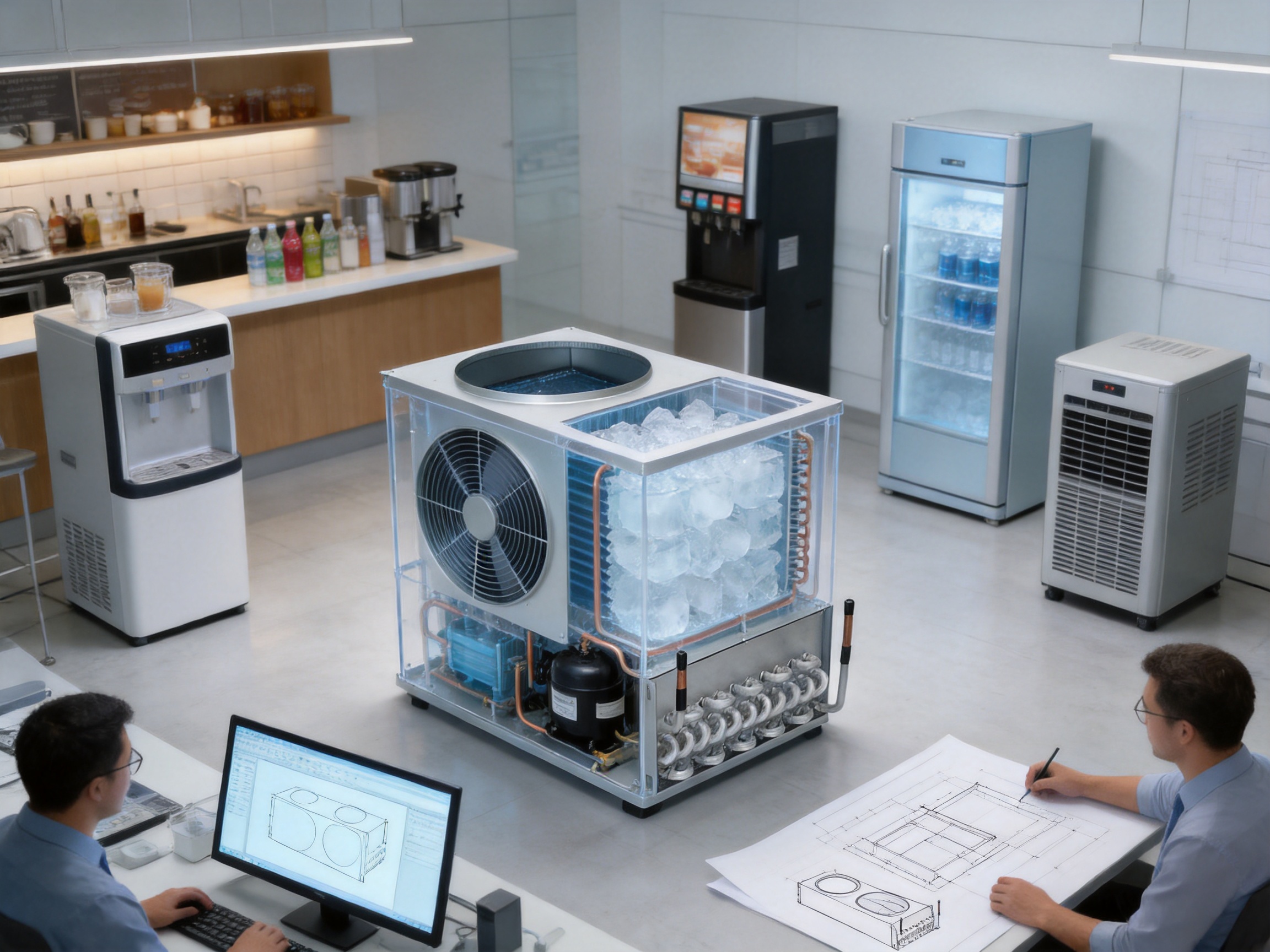
Modern ice makers depend on stable refrigeration performance, efficient heat rejection, and reliable operation in compact spaces. Although the condenser is often hidden inside the equipment, it directly influences ice production speed, energy consumption, compressor workload, operating noise, and long-term service life. A well-designed condenser must remove refrigerant heat efficiently while maintaining suitable pressure and temperature conditions throughout repeated production cycles.
The Precision Compact Ice Maker Condenser is engineered for household ice makers, countertop appliances, water coolers, beverage dispensers, small commercial refrigeration systems, and other compact cooling equipment. It combines a space-saving structure with carefully arranged heat-transfer surfaces, corrosion-resistant materials, and flexible customization capabilities. Its design is intended to support stable performance where installation space is limited but cooling reliability remains essential.
Manufactured by Hangzhou Yijie Refrigeration Technology Co., Ltd., the condenser reflects more than twelve years of experience in heat exchanger development, fabrication, testing, and application engineering. The company specializes in aluminum tube heat exchanger technology and provides customized solutions for household air conditioning, automotive air conditioning, dehumidification, cold-chain equipment, eco-friendly systems, machine rooms, warehouses, and other thermal management applications.
Compared with conventional condensers that rely heavily on copper materials or less optimized fin structures, this product emphasizes lightweight aluminum construction, efficient airflow, compact dimensions, dependable refrigerant circulation, and production cost control. These advantages make it suitable for original equipment manufacturers and equipment integrators seeking a reliable condenser platform that can be adapted to different ice maker configurations.
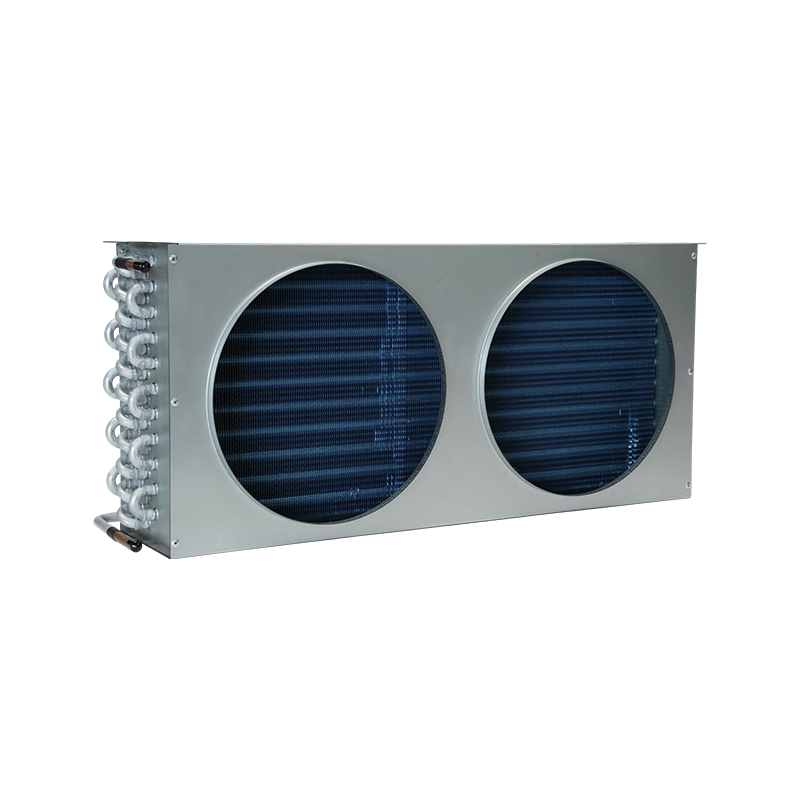
Precision Ice Maker Condenser
Product Overview
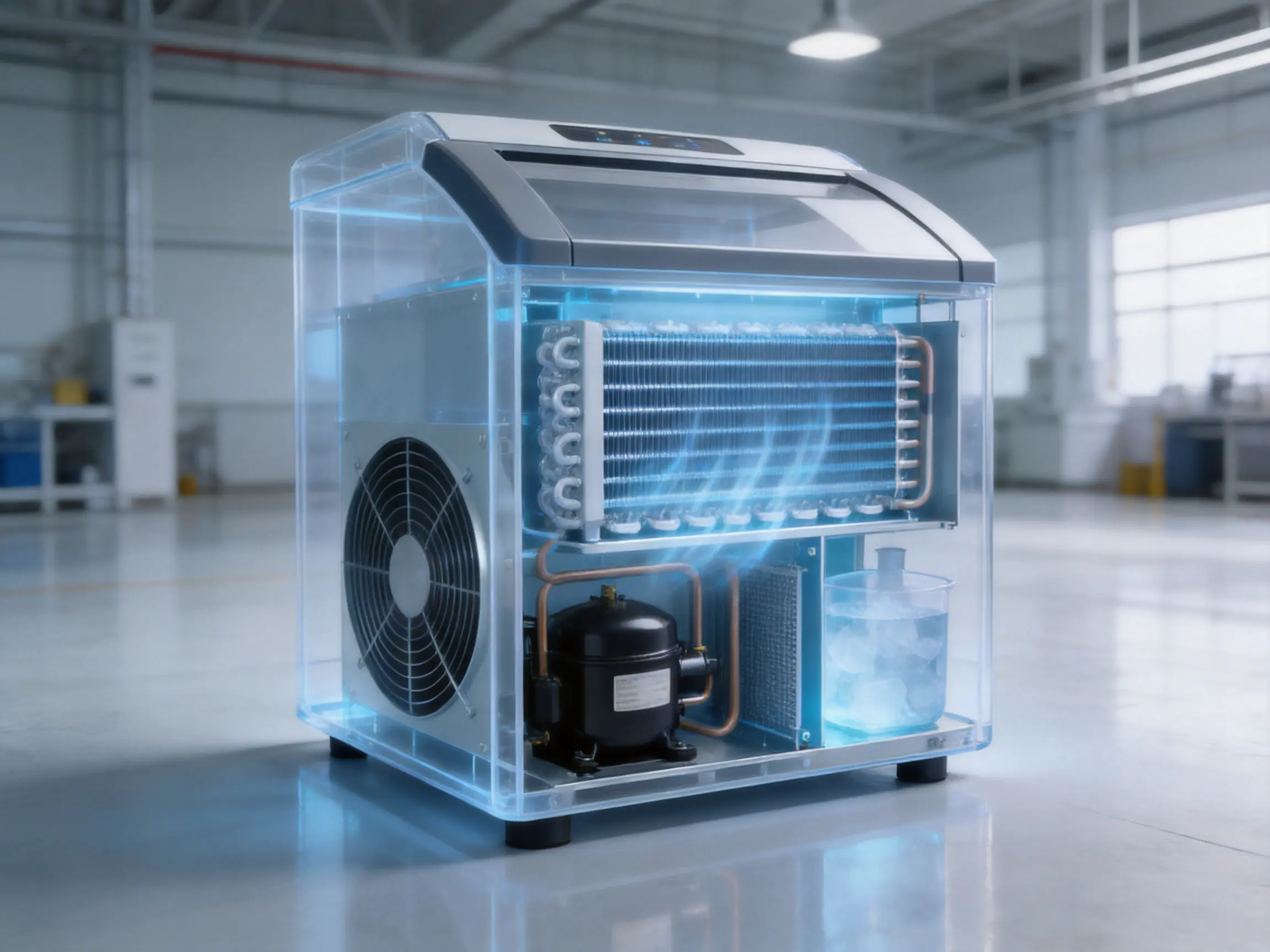
The Precision Compact Ice Maker Condenser is a refrigeration heat exchanger designed to release heat absorbed by the refrigerant during the cooling cycle. After the refrigerant leaves the compressor at a high temperature and pressure, it enters the condenser. The condenser transfers heat to the surrounding air, allowing the refrigerant to condense into a high-pressure liquid before it continues through the expansion and evaporator stages.
In an ice maker, this process is directly connected to production efficiency. If the condenser cannot reject heat effectively, condensing pressure may increase, compressor operation may become more demanding, and the evaporator may not reach the required freezing temperature quickly enough. In contrast, a properly designed condenser helps the system maintain a more stable operating condition, supporting consistent ice formation and dependable operation during repeated cycles.
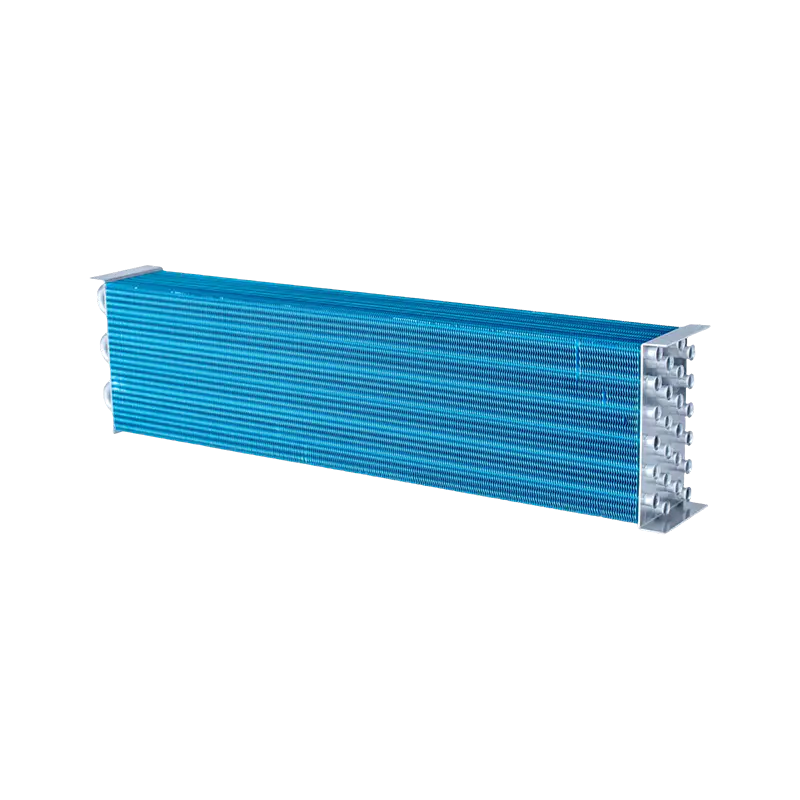
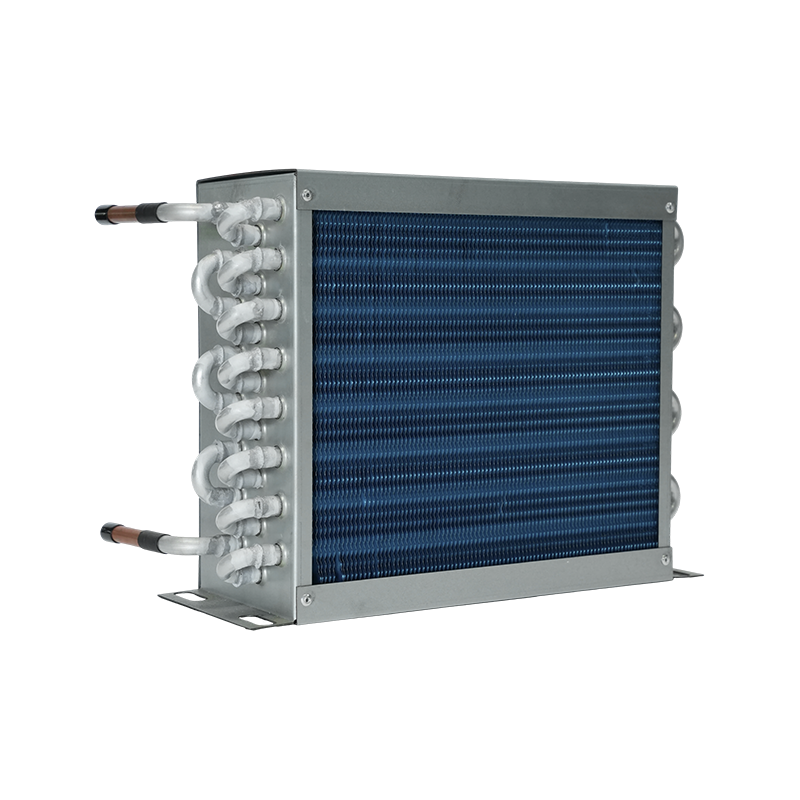
The product is designed around compact equipment requirements. Its structure can be integrated into small household or commercial appliances without consuming unnecessary internal volume. The available product information includes a core configuration measuring approximately 210 millimeters in length, 38.1 millimeters in width, and 210 millimeters in height. Another listed configuration measures approximately 105 millimeters in length, 25.4 millimeters in width, and 223 millimeters in height. These dimensional variations reflect the possibility of different mold, tube, and equipment configurations rather than a single universal size.
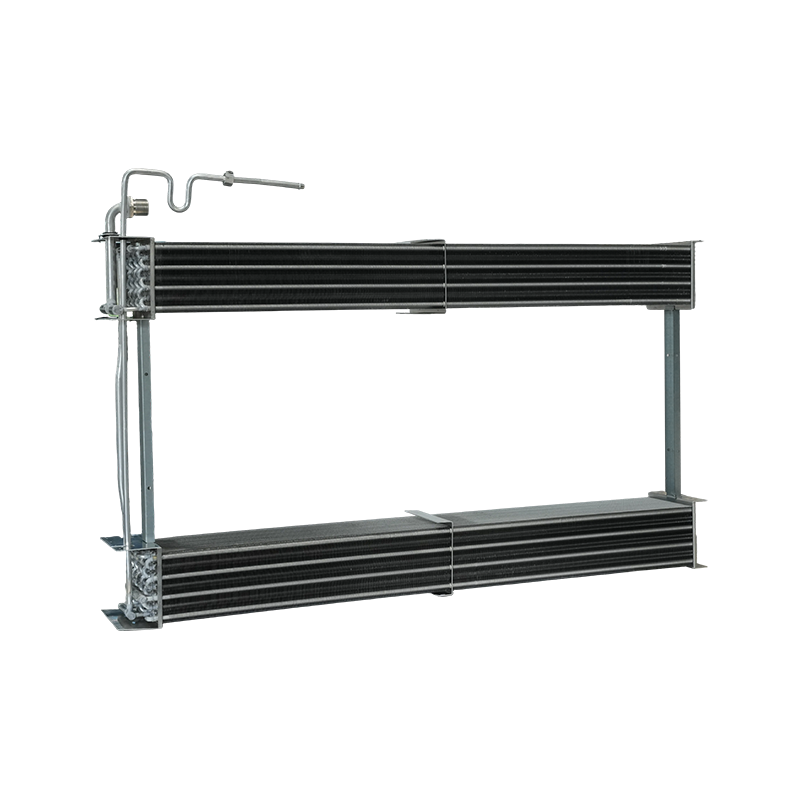
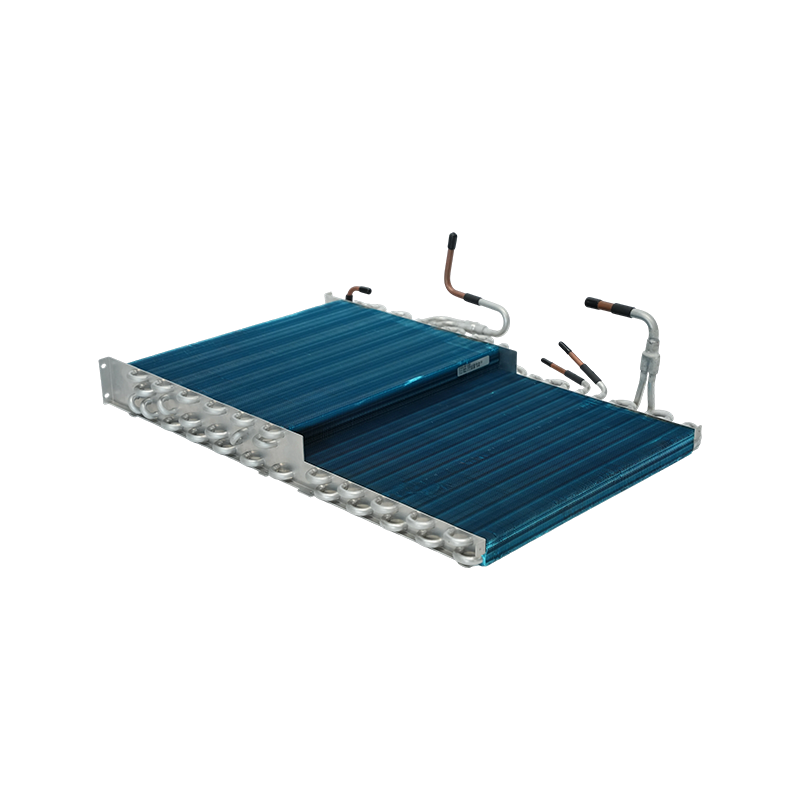
The condenser can therefore be developed according to the final equipment layout. Connection positions, tube circuits, fin spacing, overall height, width, length, and mounting features may be adjusted after technical confirmation. This flexibility is particularly valuable for countertop ice makers and small appliances where every millimeter of internal space affects the final product design.
Core Technical Features
Compact Heat Exchanger Structure
The condenser uses a compact core arrangement to provide useful heat transfer capacity within a limited installation area. A small footprint helps manufacturers design thinner, lighter, and more attractive ice makers without sacrificing the thermal performance required by the refrigeration system.
Compactness must be balanced with airflow. If a heat exchanger is made smaller without optimizing the tube arrangement and fin surface, airflow resistance may increase and heat transfer may decline. The Precision Compact Ice Maker Condenser addresses this challenge through coordinated design of the tube circuit, fin spacing, core geometry, and airflow passages.
The listed mold size of 7 by 21 by 12.7 millimeters provides a reference for the forming and tube arrangement used in one configuration. Final mold and core details can be adapted to the customer’s equipment, refrigerant circuit, rated capacity, fan arrangement, and available space.
Hydrophilic Aluminum Fin Technology
The condenser uses hydrophilic aluminum foil in its fin structure. The supplied specifications identify fin spacing of approximately 1.4 to 1.5 millimeters and a fin thickness of approximately 0.105 millimeters. This fin arrangement creates a large effective surface area for transferring heat from the refrigerant tube to the surrounding air.
Hydrophilic treatment provides useful advantages in humid operating environments. Moisture that forms on the fin surface can spread more evenly and drain more effectively instead of remaining concentrated in isolated droplets. Improved drainage can help limit water accumulation, reduce the risk of localized blockage, and support more stable airflow through the core.
The narrow fin spacing increases the available heat transfer area within a small volume. At the same time, the selected spacing must be matched to the fan capacity and expected dust or moisture conditions. Yijie’s engineering team can evaluate these factors when selecting a final fin pitch for a particular ice maker model.
Efficient Tube and Refrigerant Circuit Arrangement
Heat exchanger performance depends not only on the material but also on refrigerant distribution. A condenser with uneven refrigerant flow may develop hot zones and underused areas, reducing the effectiveness of the total core. The Precision Compact Ice Maker Condenser is designed with attention to tube routing, circuit balance, connection placement, and heat transfer utilization.
Accurate refrigerant flow control helps maintain efficient condensation across the active tube circuit. It also helps reduce unnecessary pressure loss and supports more stable operation under changing ambient conditions. For manufacturers, this means the condenser can be evaluated as part of the complete refrigeration system rather than treated as an isolated component.
The product information references copper-aluminum welded piping in one construction description, while another specification lists an all-copper construction with galvanized sheet metal. These descriptions indicate that material combinations and structural configurations may vary according to the project. The final tube, header, sheet metal, and connection materials should be confirmed through the customer’s technical specification and application requirements.
Lightweight Construction
Aluminum is significantly lighter than copper for many comparable heat exchanger structures. A condenser that uses high-performance aluminum tube and aluminum fin technology can help reduce the overall weight of a countertop ice maker or compact cooling appliance. Lower component weight can simplify product handling, reduce shipping costs, and provide greater flexibility during cabinet and mounting design.
Lightweight construction is also useful in products that must be moved frequently, such as portable ice makers, office water coolers, beverage dispensers, and small hospitality appliances. The condenser can provide the necessary heat exchange function without creating an unnecessary burden on the appliance frame or support brackets.
Performance Advantages Over Conventional Alternatives
Improved Thermal Efficiency
The primary advantage of a condenser is its ability to transfer heat effectively. The combination of aluminum fins, optimized tube arrangement, controlled fin spacing, and suitable airflow helps increase the usable heat transfer area. Efficient heat rejection allows the refrigerant to condense more reliably, supporting the complete refrigeration cycle.
Compared with a poorly matched generic condenser, a purpose-designed compact condenser can provide better use of the available installation space. Instead of increasing the external size of the appliance, the manufacturer can improve internal heat exchange through a more appropriate core structure.
Thermal efficiency may also reduce the workload placed on the compressor. When the condenser operates effectively, the compressor does not need to work against unnecessarily high condensing pressure. This can contribute to lower energy consumption, improved operating stability, and reduced stress on key refrigeration components.
Stable Ice Production
Ice production requires repeatable freezing cycles. The evaporator must reach a sufficiently low temperature, water must freeze within the intended time, and the system must complete harvest or release operations without excessive delay. Condenser performance affects each of these stages because the condenser determines how effectively the system rejects heat.
A stable condenser helps maintain more consistent refrigeration conditions from one cycle to the next. This can support uniform ice size, predictable production timing, and more reliable operation during periods of continuous demand. For household users, this improves convenience. For cafés, restaurants, offices, and small food service operations, it helps reduce interruptions and maintain available ice supply.
Lower Material and Production Costs
Hangzhou Yijie Refrigeration Technology Co., Ltd. has developed aluminum tube technology as an alternative to the limitations of traditional copper-intensive construction. According to the company’s technical information, the use of high-performance aluminum tube technology can reduce material costs by more than 30 percent in suitable applications.
Cost reduction does not depend only on raw material price. Aluminum can also provide advantages in mass production, forming, handling, and overall component weight. When the tube design, welding process, fin assembly, and inspection procedures are properly controlled, aluminum heat exchangers can support reliable performance while improving manufacturing economy.
For original equipment manufacturers, the financial benefits may extend beyond the condenser itself. A lighter heat exchanger can reduce packaging requirements and shipping weight. A compact structure can support a smaller cabinet. More efficient heat transfer may allow better use of the selected compressor and fan. These combined effects can improve the competitiveness of the finished ice maker.
Resistance to Humid Environments
Ice makers and beverage equipment frequently operate near water, condensation, cleaning processes, and changing indoor temperatures. These conditions can expose the condenser to humidity and corrosion risks. Hydrophilic aluminum fins support moisture management, while suitable material selection and surface treatment improve resistance to environmental exposure.
The company reports that its heat exchanger products have passed a 500-hour standard salt spray test. Salt spray testing is commonly used as an accelerated method for evaluating resistance to corrosive environments. Although actual field conditions differ from laboratory testing, the result provides useful evidence that the material and surface treatment system has been evaluated under demanding conditions.
Reduced Equipment Noise Potential
A condenser does not create noise independently in the same way as a compressor or fan, but its airflow resistance and thermal efficiency can influence the acoustic behavior of the complete appliance. If the core creates excessive resistance, the system may require a higher fan speed to provide sufficient airflow. A properly selected fin pitch and airflow path can help maintain the desired cooling effect without unnecessary fan operation.
For household and office ice makers, quiet operation is an important product feature. A compact condenser that works effectively with a carefully selected fan can help manufacturers develop equipment suitable for kitchens, hotel rooms, meeting areas, and other noise-sensitive locations.
Manufacturing Technology and Process Strengths
Engineering Design and Application Analysis
Manufacturing begins with an understanding of the customer’s complete refrigeration system. Before finalizing the condenser, engineers may review the cooling capacity, refrigerant type, compressor characteristics, fan performance, ambient temperature range, cabinet dimensions, connection locations, and required production rate.
This application-based approach is important because a condenser that performs well in one ice maker may not be the correct choice for another. A domestic countertop appliance, a commercial modular ice maker, and a water cooling dispenser may have different airflow conditions and heat rejection requirements. Yijie’s customization capability allows the condenser to be matched to the actual operating environment rather than selected only by external dimensions.
Tube Forming and Circuit Optimization
Tube forming determines how effectively refrigerant can travel through the condenser core. Bends must be shaped accurately to maintain the intended circuit and avoid unnecessary deformation. Excessive flattening, inaccurate spacing, or poor alignment can reduce flow quality and create assembly difficulties.
During development, the tube path can be arranged to balance refrigerant distribution and heat transfer. Connection positions may be placed according to the compressor, filter, expansion device, and cabinet layout. This helps simplify installation and can reduce the length of additional connecting tubing required by the equipment manufacturer.
Fin Stamping and Surface Preparation
Thin aluminum foil must be formed with precision to create consistent fins without cracks, excessive burrs, or irregular spacing. The fin surface must maintain good contact with the tube so heat can move efficiently from the refrigerant circuit into the fin field and then into the surrounding air.
Hydrophilic treatment is applied to improve surface wetting and drainage behavior. Process control is important because uneven treatment may produce inconsistent moisture performance or affect long-term surface protection. Proper storage and handling are also necessary to prevent contamination or mechanical damage before final assembly.
Tube-to-Fin Assembly
After forming, the tubes and fins are assembled into a compact core. The assembly process must maintain the designed fin pitch and ensure that the tubes remain correctly positioned. Good tube-to-fin contact is essential for efficient thermal conduction.
Depending on the selected product structure, the assembly may include aluminum tubing, copper tubing, welded copper-aluminum connections, galvanized support sheets, or other approved materials. The chosen combination is determined by the customer’s application, refrigerant requirements, corrosion expectations, mechanical demands, and cost objectives.
Joining and Welding Control
Refrigeration heat exchangers require secure joints because leakage can damage the entire cooling system. Welding and joining operations must therefore be controlled for temperature, alignment, penetration, cleanliness, and consistency. Copper-aluminum welded connections require particular attention because dissimilar metals have different physical and thermal properties.
A reliable joining process creates a strong connection while reducing the risk of refrigerant leakage during operation. Finished assemblies should be inspected for visible defects, dimensional accuracy, joint quality, and pressure integrity. Consistent welding quality is especially important for products manufactured in large quantities for OEM customers.
Dimensional and Visual Inspection
Inspection procedures help ensure that each condenser matches the approved drawing and technical specification. Typical checks may include core length, width, height, fin spacing, connection position, tube arrangement, mounting features, and surface condition.
Visual inspection can identify damaged fins, incomplete joints, contamination, oxidation, sharp edges, or deformation caused during handling. Dimensional verification helps ensure that the condenser will fit correctly inside the customer’s cabinet and align with the fan and connecting pipes.
Pressure and Reliability Verification
Pressure testing is a critical step in refrigeration component manufacturing. The company reports verification involving 50,000 pressure cycles. Repeated pressure cycling evaluates whether the tube, joints, welds, and structural supports can tolerate the changes that occur during long-term refrigeration operation.
The company also reports high compressive strength performance. This is important because condensers may experience pressure during transportation, installation, assembly, or accidental contact within the appliance. A structurally stable core is less likely to suffer deformation that could restrict airflow or damage the refrigerant circuit.
| Verification or Design Feature | Purpose | Customer Benefit |
| Hydrophilic aluminum fins | Increase heat transfer area and improve moisture drainage | More stable airflow and improved performance in humid conditions |
| Approximately 1.4 to 1.5 millimeter fin spacing | Balance surface area and air passage requirements | Compact structure with suitable heat exchange capability |
| 500-hour standard salt spray testing | Evaluate resistance to accelerated corrosive exposure | Greater confidence in humid and demanding environments |
| 50,000 pressure-cycle verification | Assess durability under repeated refrigeration pressure changes | Improved long-term reliability and reduced leakage risk |
| Aluminum tube technology | Reduce weight and material consumption | Lower production cost and easier equipment integration |
| Customized tube circuits and dimensions | Match the condenser to the equipment design | Better installation flexibility and application performance |
Quality Management and Reliability
Quality control for a condenser must cover materials, forming, assembly, joining, pressure integrity, and final dimensions. A defect in any of these areas can affect refrigeration performance. For example, a small leak may gradually reduce refrigerant charge, while damaged fins may restrict airflow and cause higher operating pressure.
Hangzhou Yijie Refrigeration Technology Co., Ltd. applies testing and inspection practices intended to support stable production. The company’s experience across different heat exchanger applications gives its technical team exposure to a broad range of operating conditions, material combinations, and structural requirements.
The 500-hour salt spray test provides a reference for corrosion resistance. The 50,000 pressure-cycle verification provides a reference for resistance to repeated mechanical and thermal stress. These tests do not replace complete system validation, but they provide important component-level evidence before the condenser is integrated into a customer’s finished product.
For OEM projects, additional validation may include leak testing, burst pressure testing, airflow evaluation, thermal performance testing, vibration testing, transportation simulation, and full-system endurance testing. The exact test program should be established according to the final product’s refrigerant, capacity, operating environment, and applicable regulations.
Applications
Household and Countertop Ice Makers
The condenser is particularly suitable for compact household ice makers. These products require a small internal heat exchanger that can operate reliably in kitchens and other indoor areas. Lightweight construction and flexible dimensions make it easier to fit the condenser into portable or countertop cabinet designs.
Compact household ice makers may be used intermittently or continuously depending on consumer demand. Stable heat rejection supports consistent production cycles, while hydrophilic fins can help manage moisture near water-handling components.
Small Commercial Ice Machines
Restaurants, cafés, hotels, convenience stores, and beverage shops often require compact ice production equipment. These applications may expose the condenser to higher ambient temperatures, longer operating periods, and more frequent cleaning or service activity.
A condenser with reliable pressure performance and corrosion resistance can support the demanding conditions associated with commercial use. Customized dimensions and connections also help equipment manufacturers develop models for different counter spaces and output capacities.
Water Coolers and Beverage Dispensers
The product can be used in water cooling and beverage dispensing systems where efficient refrigeration must be achieved within a compact housing. Such equipment may be installed in offices, schools, hospitality facilities, waiting rooms, and commercial premises.
Quiet operation, low weight, and stable thermal performance are valuable in these settings. A carefully selected condenser can help maintain cooling capacity without creating excessive noise or requiring a large external cabinet.
Dehumidifiers and Related Cooling Equipment
The same principles used in ice maker condenser development can apply to dehumidifiers and other air-cooling equipment. Hydrophilic fin surfaces, moisture management, compact construction, and corrosion resistance are relevant to systems that operate in humid air.
Yijie’s broader experience in heat exchangers allows the company to adapt its technology to different refrigerant circuits and equipment structures. The final product must still be engineered for the specific capacity and operating conditions of the target application.
Cold-Chain and Refrigeration Equipment
Cold-chain systems, storage equipment, and small refrigeration units require dependable heat rejection to maintain temperature stability. Although each application may require a different condenser size and circuit, the underlying requirements remain similar: efficient heat transfer, secure connections, adequate pressure strength, and resistance to environmental exposure.
Customization and OEM Support
One of the product’s main advantages is its suitability for customized development. The condenser can be adapted to the customer’s installation space, cooling capacity, fan direction, refrigerant circuit, connection method, and structural requirements.
Customization may include overall core dimensions, tube diameter, tube spacing, number of circuits, fin pitch, fin material, surface treatment, header design, inlet and outlet location, mounting bracket position, sheet metal configuration, and joining method. The final specification should be confirmed through drawings, samples, and performance testing.
OEM support is especially important when an ice maker is being redesigned for a smaller cabinet or a new market. A standard condenser may not fit the available space or may not match the selected compressor. A custom condenser can help the manufacturer avoid excessive cabinet modification and achieve a more efficient internal layout.
The development process may begin with customer drawings or a product sample. Engineers can then review the thermal and mechanical requirements, recommend a preliminary structure, produce a prototype, and evaluate the component in the complete refrigeration system. After testing and adjustments, the design can be finalized for batch production.
Clear communication is essential during customization. Customers should provide the expected cooling capacity, refrigerant type, compressor model, fan specifications, ambient temperature range, installation orientation, target production volume, and applicable quality standards. This information allows the condenser to be designed for actual performance rather than estimated conditions.
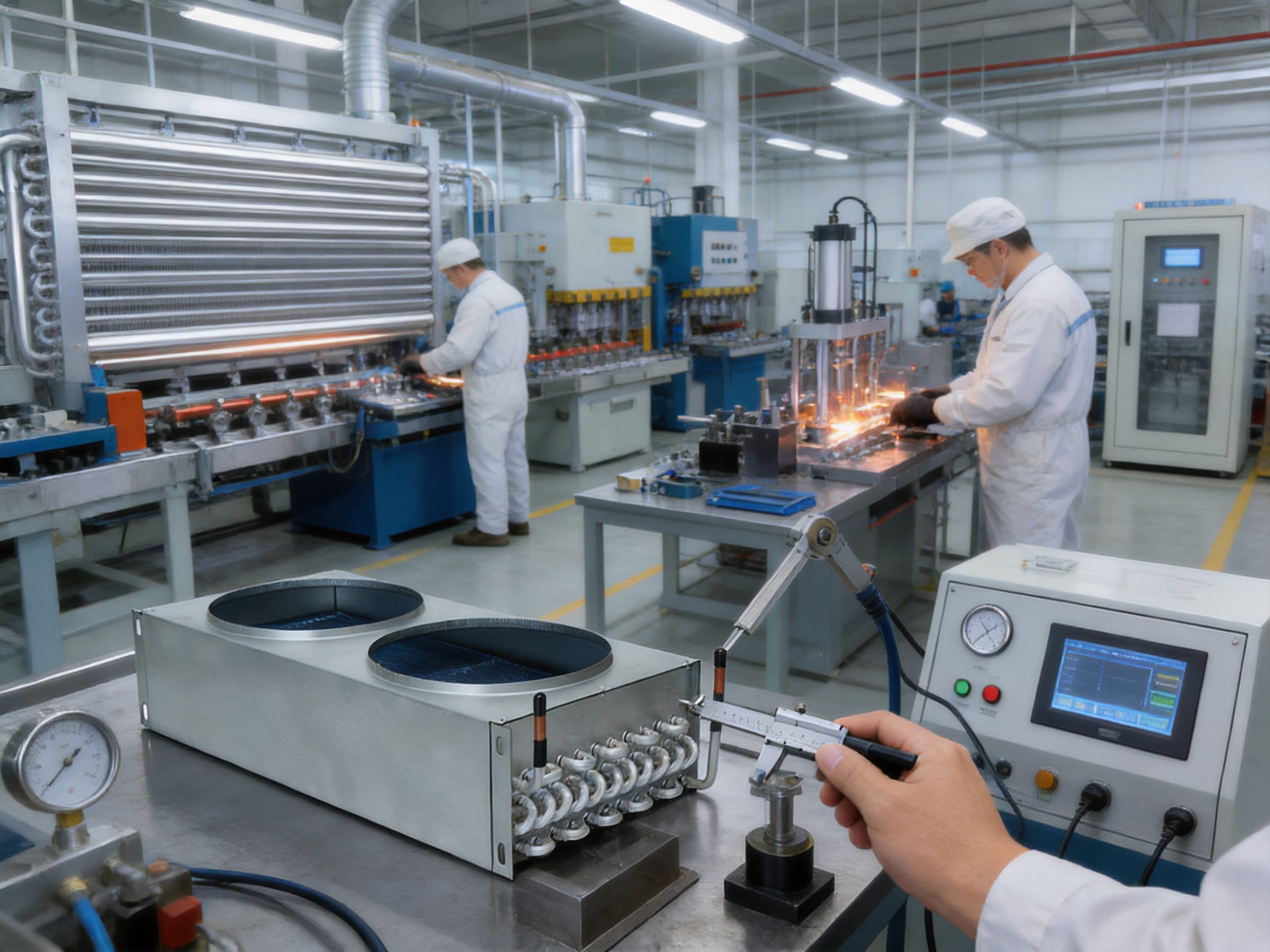
Company Manufacturing Strengths
Hangzhou Yijie Refrigeration Technology Co., Ltd. was formerly known as Hangzhou Yadan Refrigeration Parts Co., Ltd. The company has approximately twelve years of expertise in heat exchangers and related refrigeration components. Its technical team includes professionals experienced in materials science, heat exchange technology, production engineering, and process design.
The company’s development strategy focuses on high-performance aluminum tube technology. This approach addresses the cost, weight, and production limitations associated with traditional copper-heavy designs. By applying aluminum materials in suitable structures, the company can support large-scale production while maintaining the required heat exchange and mechanical performance.
Yijie serves both domestic and international markets. Its products are used in household air conditioners, automotive air conditioners, dehumidifiers, cold-chain systems, eco-friendly equipment, machine rooms, warehouses, and other thermal management applications. Experience across these industries helps the engineering team understand the different requirements related to airflow, corrosion, vibration, temperature variation, installation space, and service life.
The company also emphasizes customization. Rather than offering only fixed products, it can work with customers on dimensions, tube arrangements, fin structures, connection positions, and manufacturing details. This service model is useful for equipment producers that require a dedicated heat exchanger design for a specific product family.
Production capability is supported by testing and process control. The reported salt spray and pressure-cycle results demonstrate attention to component durability. When combined with dimensional inspection, joining control, leak testing, and application testing, these practices help provide a more complete quality assurance system.
Installation and System Integration Considerations
A condenser should be installed with sufficient airflow around the fin surface. Blocking the inlet or outlet can reduce heat rejection and increase operating pressure. The equipment designer should consider the fan direction, air recirculation, cabinet openings, filter placement, and potential accumulation of dust or debris.
Connection pipes should be routed to avoid excessive vibration, sharp bends, and stress on the condenser joints. Supporting the tubing correctly helps protect welded or brazed connections during transportation and operation. The condenser should also be mounted securely so that vibration from the compressor or fan does not create unnecessary mechanical fatigue.
Because the final performance depends on the complete refrigeration system, installation testing should include operating pressure, temperature, airflow, power consumption, ice production time, and noise. These tests can confirm whether the selected condenser is properly matched to the compressor, expansion device, evaporator, and fan.
Cleaning requirements should also be considered. A condenser that operates in a dusty environment may require periodic cleaning to maintain airflow. The hydrophilic fin surface improves moisture behavior but does not eliminate the need for routine maintenance. Equipment manufacturers should provide appropriate cleaning instructions to end users.
Environmental and Commercial Benefits
Aluminum tube technology can contribute to lower material consumption and lighter equipment. Lower weight may reduce transportation energy and packaging requirements. More efficient heat rejection can also help reduce the energy required to complete each ice-making cycle, although actual energy savings depend on the complete appliance design.
Longer service life provides another environmental advantage. When a condenser resists corrosion and pressure fatigue, the equipment may remain operational for a longer period before replacement. Durable components reduce the frequency of repairs, material consumption, and discarded appliances.
From a commercial perspective, a compact and cost-effective condenser helps manufacturers compete in markets where consumers expect portable, quiet, energy-conscious, and affordable appliances. The ability to customize the component also enables manufacturers to create different product sizes without completely changing their heat exchanger supply chain.
Q&A
What is the main function of the Precision Compact Ice Maker Condenser?
The condenser removes heat from the refrigerant after compression. It transfers that heat to the surrounding air and allows the refrigerant to condense before continuing through the refrigeration cycle. In an ice maker, this process supports stable freezing temperatures and consistent ice production.
What types of equipment can use this condenser?
It can be used in household countertop ice makers, small commercial ice machines, water coolers, beverage dispensers, dehumidifiers, cold-chain equipment, and other compact refrigeration systems. The final design should be selected according to the equipment’s capacity, refrigerant, airflow, and installation conditions.
Is the condenser available in different dimensions?
Yes. The supplied product information includes more than one dimensional configuration, including approximately 210 by 38.1 by 210 millimeters and approximately 105 by 25.4 by 223 millimeters. Since the condenser can be customized, final dimensions should be confirmed against the customer’s drawings and equipment layout.
Why are hydrophilic aluminum fins used?
Hydrophilic aluminum fins provide a large heat transfer area and help moisture spread and drain more effectively. This is useful in humid environments and in refrigeration equipment where condensation may form on or near the heat exchanger surface.
Does the product use aluminum or copper?
The available technical information describes several possible construction configurations, including aluminum tube technology, copper-aluminum welded piping, and an all-copper construction with galvanized sheet metal. Material selection depends on the application and customer specification. The final bill of materials should be confirmed before production.
How does aluminum tube technology reduce cost?
Aluminum can reduce material weight and may cost less than copper in suitable heat exchanger applications. It can also support efficient mass production and lower transportation weight. The company reports that its aluminum tube technology can reduce material costs by more than 30 percent in appropriate applications.
What reliability testing has been reported?
The company reports 500-hour standard salt spray testing, 50,000 pressure-cycle verification, and high compressive strength evaluation. These tests are intended to assess corrosion resistance, resistance to repeated pressure changes, and structural durability.
Can the condenser be customized for a new ice maker model?
Yes. Customization may include dimensions, fin spacing, tube circuits, connection locations, mounting features, sheet metal, and material combinations. Customers should provide complete technical information so the design can be matched to the compressor, refrigerant, fan, and cabinet.
How does the condenser affect ice production efficiency?
Efficient heat rejection helps maintain suitable condensing pressure and reduces unnecessary compressor workload. This supports faster and more consistent refrigeration cycles, which can improve ice production stability. Actual performance must be verified in the complete ice maker system.
What information should an OEM customer provide?
Useful information includes cooling capacity, refrigerant type, compressor model, fan performance, expected ambient temperature, cabinet dimensions, installation orientation, connection requirements, target production volume, and applicable testing standards.
Is the condenser suitable for continuous operation?
The design is intended to support repeated and continuous refrigeration operation when correctly matched to the equipment. Long-term performance depends on proper system sizing, airflow, installation, refrigerant charge, maintenance, and operating environment.
How should the condenser be maintained?
The condenser should be kept free of dust, debris, and airflow blockage. Periodic inspection and cleaning can help maintain heat rejection performance. Maintenance procedures should follow the equipment manufacturer’s instructions and should be performed with the system safely powered down.
Conclusion
The Precision Compact Ice Maker Condenser provides a practical heat exchange solution for household and small commercial refrigeration equipment. Its compact structure, hydrophilic aluminum fins, flexible dimensions, efficient tube arrangements, and customizable connections make it suitable for equipment where space, reliability, and cost must be carefully balanced.
Its advantages extend beyond the individual component. Efficient heat rejection can support stable ice production, lower compressor workload, reduced noise potential, and improved system reliability. Lightweight aluminum technology can reduce material and transportation costs, while corrosion and pressure testing provide additional confidence for long-term use.
Hangzhou Yijie Refrigeration Technology Co., Ltd. combines heat exchanger experience, aluminum tube technology, customization capability, and application-focused engineering. With reported 500-hour salt spray testing and 50,000 pressure-cycle verification, the company offers a manufacturing foundation suited to demanding OEM projects.
For manufacturers developing countertop ice makers, commercial ice machines, water coolers, beverage dispensers, or other compact refrigeration products, the condenser can be developed as part of a complete thermal management solution. By matching the core design to the compressor, fan, refrigerant circuit, cabinet, and operating environment, customers can achieve a more efficient and dependable final product.
References
1. Product technical information for the Precision Compact Ice Maker Condenser, including dimensions, fin structure, materials, and application descriptions.
2. Hangzhou Yijie Refrigeration Technology Co., Ltd. company information concerning aluminum tube heat exchanger technology, customization, production capabilities, and industry applications.
3. General principles of vapor-compression refrigeration cycles, including condenser heat rejection, refrigerant condensation, pressure control, and compressor operation.
4. Standard laboratory practices for salt spray corrosion testing of metallic materials and coated components.
5. General heat exchanger engineering principles covering fin efficiency, tube-to-fin conduction, airflow resistance, refrigerant distribution, and thermal performance.
6. General refrigeration equipment maintenance principles concerning condenser cleanliness, airflow management, pressure integrity, and system-level performance testing.